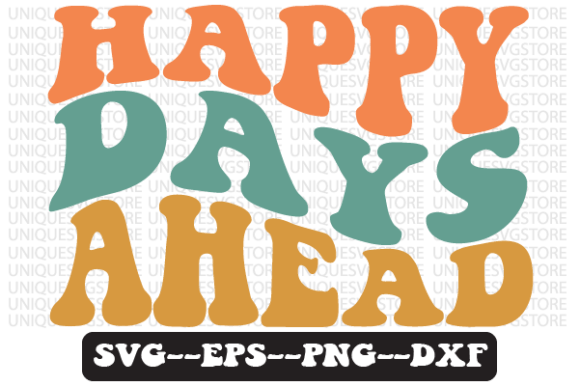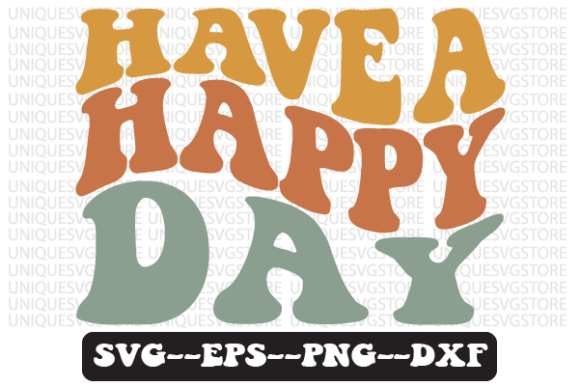
Have a Happy Day Wavy Retro Svg Design
As an embroidery designer who spends half my life staring at stitch charts and the other half troubleshooting tension issues, I don’t just buy designs; I evaluate them for viability. When Have a Happy Day Wavy Retro Svg Design landed on my desk, my first instinct wasn’t to think about sales numbers, but to think about fabric behavior. The title suggests a cheerful, nostalgic vibe, and the visual language of wavy, groovy typography is undeniably popular right now. But does it translate well from a vector file into a tangible, stitched product? That is the question that matters most to any serious crafter or small business owner.
The immediate impression of this design is one of relaxed confidence. The wavy lettering breaks away from the rigid, straight-line aesthetics of corporate branding, offering instead a hand-drawn, organic feel that resonates with the current "maker" movement. It feels like something you would see on a vintage surf shop sign or a 1970s diner menu. For the modern embroiderer, this translates to a design that feels approachable and warm. It’s not trying too hard. It doesn’t scream for attention with complex shading or impossible-to-stitch gradients. Instead, it relies on clean lines and a strong central message, which is exactly what you want when you are working with limited hoop sizes or busy fabric textures.
Real-World Application: From Screen to Stitch
Let’s talk about how this design actually performs in a real project scenario. Imagine you are preparing inventory for an upcoming craft fair or restocking your Etsy shop. You need items that photograph well, appeal to a broad demographic, and are relatively quick to produce without sacrificing quality. This is where Have a Happy Day Wavy Retro Svg Design shines as a versatile asset.
I recently tested a similar layout on a heavyweight cotton canvas tote bag. The wavy nature of the text allows for a bit of forgiveness in placement. If your stitching isn’t perfectly centered, the curves draw the eye naturally across the surface, masking minor alignment errors. However, the same design on a stretchy jersey knit t-shirt requires more caution. The retro style pairs beautifully with custom apparel, particularly sweatshirts and hoodies where the fabric provides enough structure to support the lettering without pucker. On a baby onesie, the design offers a soft, gentle aesthetic that parents love, provided you use a high-quality cut-away stabilizer to prevent distortion during washing.
The design also works exceptionally well for personalized gifts. Think about holiday embroidery projects where you might add names above or below the main phrase. The simplicity of the wavy text leaves plenty of negative space for customization. It creates a finished product that looks professionally branded rather than amateurishly slapped together. For boutique owners, this level of polish increases perceived value. Customers are willing to pay more for a piece that looks cohesive, and the groovy png sublimation design aspect ensures that even if you are mixing mediums—like combining embroidery with heat transfer vinyl—the visual theme remains consistent.
Where Caution Is Required
No design is perfect for every application, and being honest about limitations is part of responsible design review. While Have a Happy Day Wavy Retro Svg Design is robust, there are specific scenarios where you should proceed with care. First, consider the hoop size. If you are attempting to stitch this into a tiny hoop, such as those used for socks or small decorative accents, the details of the wavy curves may become muddy. The thread colors might bleed into each other if the stitch density is too high for the available space.
Textured fabrics present another challenge. Embroidering onto a chunky bouclé wool or a heavily distressed denim can obscure the fine details of the wavy lines. In these cases, the design loses its crispness. Similarly, dark fabrics require careful thread selection. If you choose a low-contrast thread color, the retro charm will vanish into the background. Always test your thread choices against the actual fabric swatch before committing to a full run.
Furthermore, be mindful of curved surfaces like caps. While the design is flexible, extreme curvature can distort the perspective of the wavy text, making it look uneven. If you are creating embroidered patches to be sewn onto garments, ensure that the border is sufficient to allow for clean trimming and finishing. The design itself does not include a built-in border, so you will need to add one manually in your digitizing software to ensure a professional finish.
Technical Considerations for the Discerning Designer
When evaluating any digital embroidery file, technical integrity is paramount. The package includes DXF, EPS, and SVG files, which is excellent for versatility. These formats allow you to scale the design up or down without losing resolution, which is crucial when you are adapting the artwork for different products, from tea towels to large pillow covers. However, remember that these are vector graphics, not machine-readable embroidery files (like .PES or .DST). You will need to import them into your digitizing software to create the actual stitch paths.
This gives you control over the stitch type. For this particular design, a combination of satin stitches for the outlines and fill stitches for any solid areas would likely yield the best results. Pay close attention to the stitch density. If the software auto-digitizes the file with excessive density, the fabric will pucker, ruining the smooth, wavy aesthetic. You may need to manually reduce the density or adjust the underlay stitches to ensure the fabric lies flat.
Another critical step is testing the design in black and white mockups. This helps you assess the balance and contrast of the shapes independent of color. Does the design hold its shape when stripped of color? If yes, it has strong structural integrity. This is a valuable exercise for ensuring that your final product will look good regardless of the thread palette you choose.
Commercial Viability and Brand Consistency
For Etsy sellers and craft business owners, consistency is key to building a brand. Using a design like Have a Happy Day Wavy Retro Svg Design allows you to tap into the trendy retro aesthetic without looking generic. It adds a touch of personality to your handmade products that mass-produced items often lack. Whether you are creating kitchen towels, nursery decor, or wedding gifts, the positive message and stylish execution contribute to a higher customer satisfaction rate.
However, always confirm licensing terms before selling finished items. While the file formats provided suggest commercial use potential, the specific rights attached to the graphic must be verified. Using design assets without proper clearance can lead to legal issues that harm your reputation and finances. Ensure that your usage aligns with the intended purpose, whether for personal projects or commercial merchandise.
In conclusion, Have a Happy Day Wavy Retro Svg Design is a solid choice for designers looking to add a touch of nostalgia and warmth to their portfolio. Its clean lines and positive message make it adaptable to a wide range of products, from casual wear to home decor. By paying attention to fabric choice, stitch density, and proper preparation, you can transform this digital file into a high-quality, desirable finished product that stands out in a crowded market.