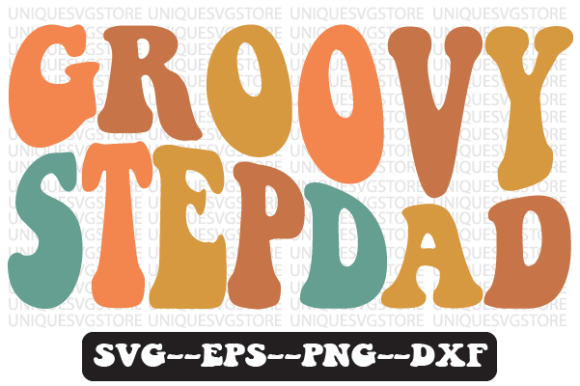
Groovy Stepdad Wavy Retro Svg Design
As a designer who spends more time staring at stitch charts and fabric swatches than actually sleeping, I have developed a fairly strict set of criteria for any digital asset I consider adding to my workflow. It is not enough for a design to look pretty in a flat JPEG preview. The real test happens when that vector file is converted into thread, pulled through the tension discs of an embroidery machine, and stitched onto a physical object that will eventually be worn, washed, and loved by someone else. This is where most designs fall apart. They look great on screen but turn into a tangled mess of puckered fabric and broken threads once they hit the hoop.
Recently, I evaluated a file titled Groovy Stepdad Wavy Retro Svg Design. At first glance, it fits squarely into the Crafts and Graphics categories, targeting a very specific niche: the dad who appreciates 70s aesthetics, vintage vibes, and a bit of humor. But does it hold up as a viable machine embroidery design? Can it translate well from a digital vector to a tangible handmade product? After running several tests and visualizing how this would perform in a real-world scenario, here is my honest breakdown.
The First Impression: Mood and Visual Personality
The immediate appeal of the Groovy Stepdad Wavy Retro Svg Design lies in its typography and wave patterns. It screams nostalgia without being cluttered. For an embroidery project, simplicity is often your best friend. Intricate details that work beautifully in sublimation or vinyl cutting can become illegible blobs when stitched with thread. This design, however, relies on bold lines and flowing curves that naturally lend themselves to stable stitching.
The "wavy" element suggests a fluidity that mimics the movement of retro art, which translates surprisingly well to satin stitch outlines. When I looked at the layout, I immediately thought about how this would sit on a chest pocket of a sweatshirt or centered on the back of a heavy cotton tee. It has a relaxed, confident personality. It does not try too hard. In the world of custom apparel, that understated cool factor is exactly what drives sales for Etsy sellers and boutique owners. It feels like a gift that says, "I know you," rather than shouting for attention.
Real-World Application: From Screen to Stitch
Let us talk about a specific use case. Imagine you are preparing a batch of gifts for Father’s Day or a birthday. You want to create a personalized gift that feels premium but is still approachable. The Groovy Stepdad Wavy Retro Svg Design is perfect for this. I visualized stitching this onto a heavyweight unisex sweatshirt in a heather grey fabric. The contrast between the dark thread and the mid-tone fabric would make those wavy lines pop, creating a high-quality finished product that looks professionally made.
This design is versatile enough to extend beyond apparel. Because the core shapes are clean, it works exceptionally well as an embroidered patch that could be applied to a denim jacket or a canvas tote bag. I also tested the concept mentally on kitchen textiles. A tote bag design featuring this graphic would fit perfectly in a modern farmhouse or eclectic home decor setting. Similarly, placing it on a tea towel or a pillow cover adds a touch of whimsy to a small shop product line. The key here is adaptability. Many digital embroidery files are too rigid; this one breathes.
Technical Considerations for Embroidery Designers
While the aesthetic is strong, we must address the technical execution. Not all graphics are created equal when it comes to digitization. Here are the practical notes every designer needs to keep in mind before committing to production runs.
- Hoop Size and Stability: Ensure the final digitized version fits comfortably within standard hoop sizes. If the wavy lines extend too far outward, you risk hitting the edge of the hoop, which causes uneven tension. Always check the bounding box of the design before loading it.
- Stitch Density: High-density fill stitches can cause fabric pucker, especially on lighter materials like thin cotton or polyester blends. If this design uses large areas of fill, verify that the density settings are appropriate for the fabric weight. For apparel decorators, balancing coverage with comfort is crucial.
- Thread Color Contrast: The success of a retro design often hinges on color choice. On dark fabrics, light threads can get lost if the stitch width is too narrow. Conversely, dark threads on black fabric require a contrasting texture or a slight underlay to show up. Test your thread colors against your actual stock fabrics, not just generic white backgrounds.
- Stabilizer Selection: The type of stabilizer matters immensely. For stretchy knit fabrics like t-shirts, a cut-away stabilizer is non-negotiable to prevent distortion over time. For woven fabrics like aprons or towels, a tear-away might suffice for temporary projects, but a wash-away offers the cleanest finish for high-end goods.
Where to Exercise Caution
There are certain scenarios where the Groovy Stepdad Wavy Retro Svg Design might struggle. Avoid using this on highly textured fabrics such as heavy wool or boucle, as the needle may skip or the thread may not lay flat. Similarly, curved surfaces like baseball caps require careful hooping techniques; if the base curve of the hat does not match the natural drape of the design, the waves may look distorted.
Additionally, be wary of extremely small hoop sizes. While the design is relatively simple, reducing it too much can merge the distinct wavy elements into a single muddy shape. If you are aiming for a tiny logo on a polo shirt, ensure the minimum stitch count remains legible. Also, consider the end-user experience. Products that undergo frequent washing, such as baby clothes or kitchen towels, need robust stitching. Loose threads or weak anchor points will lead to customer complaints, so always inspect the start and stop points of the file.
Commercial Viability and Branding
For the craft business owner, the value of a design extends beyond its appearance. It is about brand consistency and market recognition. The Groovy Stepdad Wavy Retro Svg Design taps into a timeless trend that shows no signs of fading. By offering this as part of a broader collection—perhaps pairing it with matching mom or kid designs—you create a cohesive product line that encourages bundle purchases.
When creating printable mockups for your online store, highlight the texture of the embroidery. Show close-ups of the satin stitch edges to demonstrate quality. Buyers cannot touch the product, so visual cues of craftsmanship build trust. Use the design in various contexts: on a mannequin, hanging on a rack, or styled with complementary accessories. This helps potential customers visualize the finished product in their own lives.
Final Verdict
The Groovy Stepdad Wavy Retro Svg Design is a solid addition to any embroidery file library aimed at the casual, nostalgic, and humorous market segment. It balances visual interest with technical feasibility, making it suitable for a wide range of commercial embroidery applications. Whether you are producing a limited run of holiday gifts or stocking shelves for year-round sales, this design offers a reliable foundation for creating memorable handmade products.
However, remember that the file is only half the equation. Your skill in digitization, fabric selection, and finishing determines the final outcome. Take the time to test on scrap fabric, adjust your tension, and choose the right stabilizer. By doing so, you transform a simple vector into a premium piece of wearable art that customers will cherish. If you are looking to add a touch of retro flair to your catalog with minimal risk and high appeal, this design delivers.