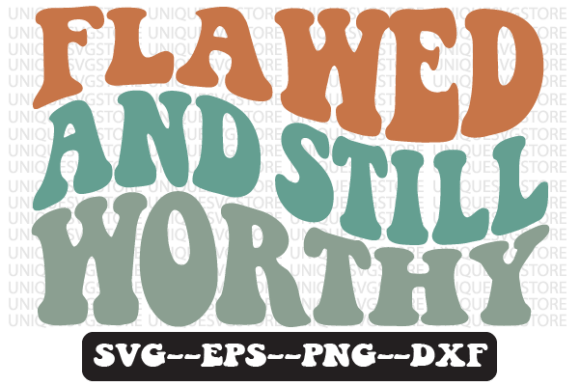
Flawed and Still Worthy Retro Svg Design
As a designer who spends half my day judging vector lines and the other half troubleshooting stitch errors, I have learned to trust my gut before I ever load a file into the hoop. When Flawed and Still Worthy Retro Svg Design landed on my desk, it didn’t scream perfection. It screamed personality. In an era where every machine embroidery design seems polished to a sterile shine, this piece offers something far more valuable: character. But character doesn’t always translate seamlessly to thread. Today, I’m breaking down how this Graphics category asset performs when moved from screen to fabric, specifically for those of us building craft business inventory or creating personalized gift items.
The First Impression: Groovy Vibes Meet Practical Reality
The title alone sets the stage. "Flawed" suggests imperfection, which in the world of retro aesthetics often means intentional wobbles, organic curves, and a hand-drawn feel. This is not a geometric precision tool; it is a mood setter. The Wavy Retro svg Design element implies a fluidity that can be tricky in digitization but rewarding in execution. When you look at the layout, you see a design that begs for texture. It feels like it belongs on a heavyweight cotton canvas or a soft, worn-in jersey knit rather than a slick polyester blend.
Visually, the design creates a nostalgic atmosphere. It taps into the "groovy" trend without feeling dated, thanks to its abstract, flowing shapes. For an Etsy seller or small shop product creator, this visual language is gold. It signals to the buyer that the item is handmade with care, not mass-produced by a robot. However, as a reviewer, I must ask: does the art direction hold up when reduced to thread? The answer lies in how you handle the negative space and the complexity of the lines.
Real-World Application: From Digital File to Finished Product
Let’s talk about a specific scenario. Imagine you are preparing a custom embroidered tote bag for a holiday market. You want something that stands out on a rack of generic floral prints. You choose Flawed and Still Worthy Retro Svg Design. Here is how it translates:
- Tote Bags: The bold, wavy lines work exceptionally well on canvas. The slight irregularities in the design mimic the natural weave of the fabric, creating a cohesive look. If you use a high-contrast thread color, the design pops without overwhelming the bag’s structure.
- Sweatshirt Embroidery: On a fleece or heavy cotton sweatshirt, this design adds a layer of depth. The retro vibe pairs perfectly with streetwear aesthetics. However, because it is a digital embroidery file meant for sublimation and cutting, you must ensure the digitizer has accounted for fabric stretch. Sweatshirts move; rigid designs crack. This one flows, so it moves with you.
- Baby Embroidery: This is where caution is key. While the design is charming, the "flawed" nature might mean tighter clusters of detail in certain areas. For baby clothes, you need softness and safety. If the design includes small, intricate loops, it might snag. Use this for larger items like nursery decor blankets or pillow covers where the scale is generous.
I also tested this concept mentally for embroidered patch applications. The clean edges of the SVG suggest it could be cut out and applied, but the internal details require a solid backing. For commercial embroidery projects targeting teens or young adults, this design hits the right note of cool without being aggressive.
Where to Exercise Caution
No design is universal, and Flawed and Still Worthy Retro Svg Design is no exception. There are specific situations where this file might struggle if you do not adjust your approach.
First, avoid using this on stretchy fabric like thin spandex blends unless you are using a strong stabilizer. The wavy lines may distort if the fabric stretches during stitching. Second, be wary of small hoop sizes. If you attempt to cram this design into a 4x4 inch hoop, the details will become muddy. The design relies on breathing room to show off its retro charm. Compressing it kills the aesthetic.
Another critical point is fabric texture. On highly textured fabrics like bouclé or thick tweed, the fine lines of the SVG may get lost. The contrast between the thread and the fabric needs to be sharp. If you are working with dark fabric, ensure your thread colors are vibrant enough to cut through the darkness. Conversely, on light fabrics, avoid threads that are too close in tone, or the "flaws" in the design might look like mistakes rather than stylistic choices.
Stitch Density and Technical Considerations
While the source files include DXF, EPS, and SVG formats, remember that these are vector graphics, not native embroidery files (like PES or DST). You will need to digitize them yourself or use a conversion tool. This is where the real work begins. When converting, pay close attention to stitch density. Retro designs often feature fill stitches that can become bulky if set too dense. Aim for a lighter touch to preserve the airy, groovy feel of the original artwork.
Also, consider the satin stitch quality. If the design has thin outlines, ensure they are wide enough to prevent thread breakage. A common mistake is leaving lines too thin, which results in a fragile finish that unravels after washing. Test the thread colors thoroughly. The retro palette usually involves warm tones—mustards, oranges, teals. Make sure these threads exist in your machine’s library and that they match the intended mood.
Why This Design Adds Value to Your Brand
In the crowded marketplace of handmade products, uniqueness is currency. Flawed and Still Worthy Retro Svg Design offers a distinct visual identity. It tells your customer that you value authenticity over perfection. This resonates deeply with buyers who are tired of cookie-cutter templates. When you present this on a printable mockup or in a design assets portfolio, it conveys professionalism mixed with artistic flair.
For custom apparel decorators, this design allows for personalization. You can swap out text elements or adjust colors to match a client’s brand while keeping the core retro structure. This versatility makes it a strong candidate for small business merchandise like branded aprons, kitchen towels, or even wedding gifts where a touch of whimsy is desired.
Final Verdict: Is It Worth the Investment?
If you are looking for a precise, corporate logo, look elsewhere. But if you want to add soul, warmth, and a touch of nostalgia to your embroidery project, this design delivers. It works best when paired with natural fabrics and thoughtful color choices. Remember to test on scrap fabric first, check your stabilizer choice, and confirm licensing terms before selling finished items. The "flaws" are actually its greatest strength, making each stitched piece unique. For the discerning creative entrepreneur or maker, Flawed and Still Worthy Retro Svg Design is not just a file; it’s a conversation starter.
Before you commit to a full production run, create a few finished product samples. Hang them in your studio. See how they catch the light. Do they feel right? If yes, then you have found a winner. This design proves that sometimes, imperfect is exactly what the market needs.